
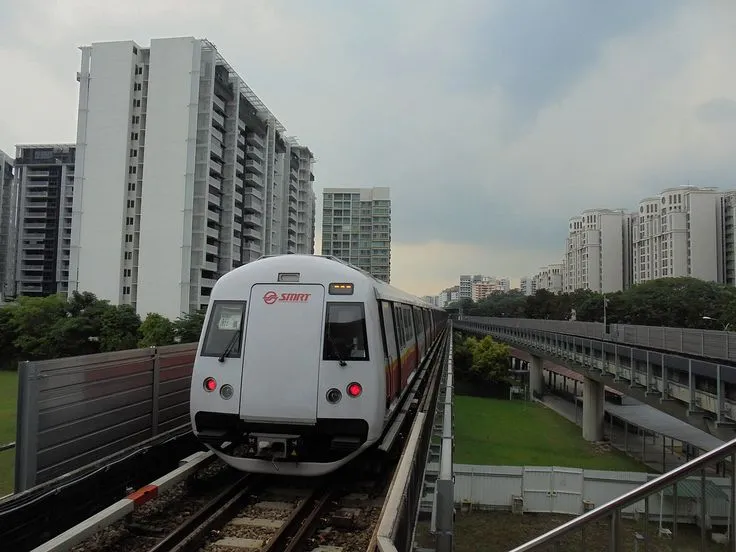
Homes near MRT stations often command attention because the benefit is easy to understand. Walking to a train reduces dependence on cars and buses, makes travel times more predictable and gives residents access to a wider range of jobs and amenities. That convenience can support both owner demand and tenant interest.
Still, “near MRT” is not a complete investment thesis. Buyers need to consider walking quality, line connectivity, station crowding, noise, future supply, and the premium already built into the purchase price. The value of transport is strongest when it improves daily life without creating other disadvantages.
Walking time matters more than map distance
A straight-line distance can look short while the real walking route involves major roads, uncovered paths or multiple crossings. Buyers should walk from the site to the station at the times they would normally travel and notice heat, shelter, gradients and pedestrian convenience.
The appeal of Dorset Gardens includes its proximity to Farrer Park MRT, but future buyers should still evaluate the exact pedestrian route from the completed development. A comfortable seven-minute walk can feel very different from a similar distance that is indirect or exposed.
The line must connect to where people go
A station on a useful network can widen the employment and lifestyle areas reachable without a car. Interchanges can add further value because residents have more route choices when work locations change or when another line experiences disruption.
The same principle applies in the north. Buyers considering Clovelle of Woodlands should look at Woodlands South and the wider Thomson-East Coast Line in relation to their own destinations. The station matters because of the network it opens, not because the project brochure can display an MRT icon.
Very close can come with trade-offs
Properties beside rail infrastructure may experience train noise, station crowds or heavier pedestrian movement depending on the site. Some buyers prefer being a few minutes away rather than directly next to an entrance, especially when the walking route remains sheltered and convenient.
Stack selection can therefore matter. A development may be close to MRT overall while certain units face roads, tracks or busy public areas. Buyers should study the site plan and visit the neighbourhood rather than treating every stack as equally exposed.
The market may already price the advantage
Transport accessibility is widely understood, so buyers often pay a premium for it at launch. That premium can be reasonable, but it should be compared with nearby projects one or two stations away and with homes that offer more space for the same budget.
Ask what future resale buyers receive for the extra price. If they save meaningful time and gain access to several employment areas, the premium may be defensible. If the station difference barely changes the journey, the higher entry price deserves closer scrutiny.
MRT access works best with a complete neighbourhood
A station helps people leave the neighbourhood, but a good residential area also gives them reasons to stay. Groceries, healthcare, schools, parks and food within a practical radius increase the usefulness of the location beyond the commute.
This combination can support demand across more life stages. For a single professional, the access to the train might be most important, whereas for a family the schools and services of the day are more important. As the buyer’s profile evolves, locations that can serve both can continue to be relevant.
Station environments can improve or weaken the premium
Not all MRT stations create the same residential experience. Some are integrated with retail, bus interchanges or sheltered pedestrian networks, while others sit beside busy roads with fewer nearby services. The differences have an impact on how convenient the station is in the morning commute.
Buyers should explore the area around the station, not just the platform. A home may deserve a stronger premium when the station also acts as a neighbourhood hub, because transport, errands and social activity are combined in one convenient node.
Conclusion
MRT proximity can support home value because it saves time, broadens access and reduces transport friction. The effect is strongest when the walk is practical, the line serves useful destinations and the surrounding neighbourhood meets everyday needs.
Buyers should therefore value the journey, not just the station distance. Walk the route, study the network, check stack exposure and compare the price premium with alternatives. Transport can be a durable advantage, but only when the experience matches the map.


More Stories
Why Accessibility Matters When Exploring Lucerne Grand and Amberwood at Holland
Interior Planning Ideas for Buyers Exploring The Serra Residences and Dunearn Green
How to Recognize an Executive Condominium That Matches Your Lifestyle